License plates help identify vehicles, support registration records, and provide visible information for law enforcement in Iowa. Real Iowa plates follow state requirements for size, lettering, numbering, materials, and approved designs. Fake plates can copy these features but may contain incorrect details, altered numbers, poor-quality markings, or unauthorized formats. Knowing the visual and registration clues can help vehicle owners spot questionable plates. A clear comparison of authentic and counterfeit plates can help readers recognize common warning signs before relying on a plate as valid Iowa identification.
License plates issued in Iowa have specific features that separate legitimate plates from unauthorized copies. Genuine plates use state-approved numbering, lettering, colors, materials, and security characteristics that match Iowa registration records. Fake plates may show unusual fonts, incorrect spacing, inconsistent colors, missing details, or numbers that do not match official records. Checking these characteristics can help identify suspicious plates and reduce confusion during vehicle transactions or roadside checks. This comparison explains the main differences between real and fake Iowa plates in a clear, practical format for vehicle owners.
How to Check Current and Available Iowa License Plates
To check current and available Iowa license plates, use the official Iowa Department of Transportation (Iowa DOT) plate services. The process lets you review the current plate designs, see available specialty plate options, and check whether a requested personalized plate number is available. Iowa license plates can vary by plate type, design, and personalization options, so reviewing the available choices helps vehicle owners identify the appropriate plate before completing the registration process.
- Personalized plate: Use the Iowa DOT online system to enter your preferred letter or number combination and check whether it is available or already assigned to another vehicle. Eligible plates may also offer a reservation option.
- Specialty plate: Review Iowa DOT’s current plate listings to see the available designs. Each specialty plate may have different eligibility requirements and fees.
- Regular county-numbered plate: These plates follow a different process. Regular county-numbered plates are handled through the county treasurer in the county where the vehicle is registered.
- Plate availability: Availability means a plate number or combination is currently available to request. It does not automatically prove that a physical plate is genuine.
- Plate authenticity: A genuine Iowa license plate is issued through the authorized registration process. An availability result alone cannot confirm the authenticity of a physical plate.
What Does a Genuine Iowa License Plate Look Like?
A genuine plate does not have one single appearance because Iowa issues standard, specialty, and personalized plates. An authentic plate should correspond with an official Iowa license plate design or an authorized personalized option and be properly connected with vehicle registration. Current Iowa license plates can differ in colors, graphics, lettering, and layout based on their plate type. For that reason, an unusual appearance alone is not enough to label a plate fake. The design, plate number, registration information, and official Iowa DOT listings should be considered together.
Standard Iowa Plate Characteristics
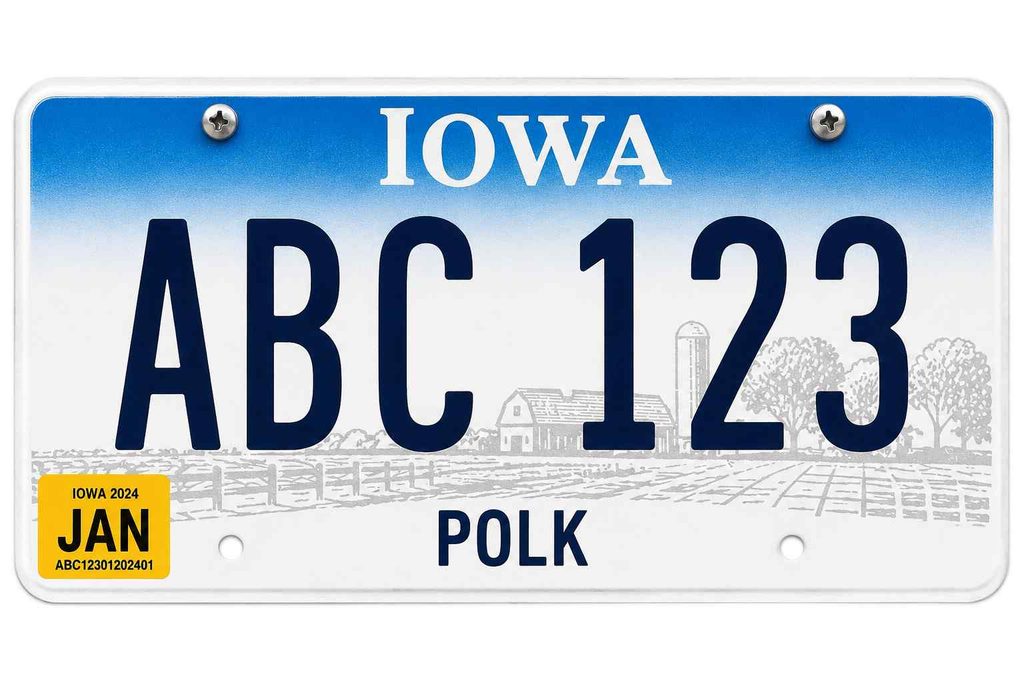
A standard Iowa plate follows the state’s approved design and displays identifying information, including the assigned plate number. Its lettering, numbers, graphics, and overall layout should be consistent with the official design currently issued by Iowa. Standard plates should be distinguished from specialty plates, which can use different artwork and color schemes. When checking a standard plate, compare its overall appearance and plate number with official Iowa DOT information and the vehicle’s registration documents. A difference from an older Iowa plate design does not automatically indicate that the plate is fake, since plate designs can change over time.
Specialty and Personalized Plates Can Look Very Different
An authentic plate can look substantially different from a standard Iowa plate when it belongs to an officially issued specialty or personalized category. Iowa DOT lists various specialty options, including blackout, natural resources, collegiate, military, and organizational designs. These plates may use different colors, graphics, backgrounds, and layouts. A personalized plate can have a selected letter or number combination that differs from a standard assigned sequence. Checking Iowa DOT’s current listings can help determine whether a particular design is among the available Iowa license plates offered through the state’s official process.
A Different Design Does Not Automatically Mean Fake
A different-looking plate is not automatically a counterfeit or imitation plate. A legitimate specialty plate can have an authorized design that looks very different from a standard plate while remaining a genuine Iowa plate. Before calling a plate fake, check whether its design appears in Iowa DOT’s current listings and whether its plate number corresponds with the vehicle’s registration. This approach helps distinguish an unusual but authorized design from an unauthorized reproduction.
Compare the Plate Number With Registration Documents
Start by comparing the plate number on the physical Iowa license plate with the information shown on the vehicle’s registration documents. The letters and numbers on the plate should match the assigned information on the registration card.
Check these details:
- Plate number: Match every letter and number on the physical plate with the registration card.
- Assigned plate: Confirm that the plate shown on the registration documents is the same one attached to the vehicle.
- Characters: Look for letters or numbers that appear changed, scratched, covered, or replaced.
- Registration information: If the plate number does not match the documents, do not assume the plate is legitimate.
Check the Vehicle Information
The registration card contains vehicle details that can help confirm whether the plate is correctly associated with the vehicle. Compare the information on the card with the actual vehicle.
Check the following:
- VIN: Compare the VIN shown on the registration card with the VIN assigned to the vehicle.
- Vehicle description: Check details such as the make, model, and other identifying information.
- Registration number: Confirm that the registration information corresponds with the vehicle records.
- Assigned plate: Verify that the plate number matches the number listed on the registration documents.
When a Plate Number Looks Suspicious
Certain signs may indicate that an Iowa license plate needs further review.
Look for:
- Altered characters: Letters or numbers appear modified, scratched, covered, or replaced.
- Number mismatch: The plate number does not match the registration documentation.
- Incorrect design: The plate design does not correspond with an official Iowa plate.
- Duplicate or reproduced plate: The physical plate appears copied, reproduced, or otherwise different from an officially issued plate.
Security Features of Real License Plates
Real Iowa license plates can be assessed through their security features, official design, printing quality, and other physical characteristics. An authentic plate should correspond with an Iowa-approved design and display a legitimate plate number connected with the vehicle’s registration information. Signs of poor printing, unusual lettering, altered characters, or an inconsistent design can raise questions about whether a plate is genuine. A counterfeit plate may attempt to reproduce the appearance of an Iowa plate, so physical inspection should be combined with registration information and official Iowa DOT resources. Official manufacturing details should not be assumed from appearance alone.
Observable Authenticity Indicators
Several visible details can help identify whether a plate appears consistent with a genuine plate. Check the plate as a whole rather than relying on one feature.
- Correct design: The design should correspond with an officially issued Iowa plate.
- Consistent printing: Text, numbers, and graphics should appear properly produced and clearly displayed.
- Correct lettering: Letters and numbers should use the appropriate appearance for the plate design.
- Legitimate plate number: The number should match the vehicle’s registration information.
- Registration information: The plate should correspond with the assigned registration records.
- Physical appearance: The plate should not show unexplained alterations, reproduction marks, or unusual modifications.
Why One Physical Feature Is Not Enough
A single physical characteristic does not establish that an Iowa license plate is authentic. Texture, reflective material, a hologram, barcode, hidden marking, or another visual detail should not be treated as proof unless an authoritative Iowa source confirms its role as a security feature. Counterfeit plates can reproduce individual visual elements. A more reliable assessment combines the plate’s design, lettering, plate number, physical characteristics, and registration information.
When Physical Inspection Raises Questions
If a physical inspection raises concerns, compare the plate with current information from the Iowa DOT and review the vehicle’s registration documents. Check whether the design, plate number, and registration information correspond. If the plate still appears questionable, contact the appropriate county treasurer or Iowa DOT office for clarification. Avoid making a final authenticity judgment based solely on appearance, and do not attempt to investigate private registration information belonging to another vehicle owner.
Fake vs Real Iowa License Plates
Iowa license plates help identify registered vehicles, but a plate’s appearance alone does not prove that it is genuine. A real Iowa license plate should use an officially issued design, display a valid plate number, and correspond with the vehicle’s registration information. A fake Iowa license plate may imitate an official design, contain altered characters, or show information that does not match the registration documents. Checking the plate number, lettering, design, physical appearance, and registration details together provides a more reliable way to identify potential differences between an authentic plate and a counterfeit plate.
Law on Fake and Imitation License Plates
Iowa law addresses both the proper display of registration plates and the use of imitation plates. Iowa Code §321.38 requires a registration plate to be securely attached to the vehicle, clearly visible, and maintained in a clearly legible condition. Iowa Commercial Plates must also meet the applicable registration and display requirements for commercial vehicles. The same section prohibits fastening an imitation plate that imitates or claims to imitate the official registration plate of another state, U.S. territory, or foreign government.
What Iowa Code §321.38 Says
Under Iowa Code §321.38, a registration plate must be securely fastened in a horizontal position to the vehicle for which it was issued. The plate must remain clearly visible and legible and should be free from foreign materials that interfere with its appearance. The law separately prohibits an imitation plate that imitates or purports to imitate an official registration plate from another state, U.S. territory, or foreign government. This means a plate should not be judged as fake simply because its appearance differs from a standard Iowa plate; the source and type of the plate matter.
Imitation Plates vs Legitimate Specialty Plates
A legitimate Iowa specialty plate may have a design that looks very different from a standard plate and can still be an official registration plate. Iowa DOT lists specialty and personalized plates as legitimate plate options and provides an online process for eligible plates. If a specialty plate is officially offered and properly issued, its different artwork or appearance does not make it an imitation plate. A counterfeit plate is different because it may reproduce an official-looking design without being properly issued.
Plate Visibility and Obstruction Rules
Iowa’s plate rules require registration plates to remain clearly visible and legible. Iowa DOT states that a plate frame must permit full view of all letters and numbers printed on the plate. This includes state, county, or collegiate information, not just the main plate number. Iowa DOT further states that a frame should not cover or obscure the registration sticker.
Frequently Asked Questions
Iowa license plates including how to identify a genuine plate, check a plate number, recognize signs of a counterfeit plate, and current specialty designs. These answers can help readers compare a physical plate with official Iowa information and their own registration documents. The section also covers blackout plates, personalized plates, and other plate types that may look different from a standard Iowa plate.
How can I tell if an Iowa license plate is real?
To check whether an Iowa license plate appears genuine, compare its design, lettering, and plate number with official Iowa DOT information. For your own vehicle, compare the physical plate with the registration card and confirm that the assigned number matches. Look for altered characters, unusual printing, or a design that does not correspond with an officially issued plate.
What does a real Iowa license plate look like?
A real Iowa license plate can have different appearances based on its plate type. Standard plates have an Iowa-approved design, while specialty and personalized plates can use different colors, graphics, and layouts. Iowa DOT lists current plate options, including specialty categories. A different-looking plate is not automatically fake.
What makes an Iowa license plate fake?
A fake Iowa license plate may be an imitation or unauthorized reproduction that has not been properly issued through Iowa’s registration process. Warning signs can include altered characters, an unofficial design, poor or inconsistent printing, or a plate number that does not match the vehicle’s registration documents.
Are blackout Iowa license plates real?
Yes, Iowa DOT lists blackout plates among its specialty plate options. A legitimate blackout plate can therefore have a very different appearance from a standard Iowa plate. The key issue is whether the design is officially offered and the physical plate was properly issued. A black-colored or blacked-out plate that does not correspond with an official Iowa design should not automatically be considered a genuine specialty plate.
How do I check an Iowa plate number?
For your own vehicle, compare the Iowa plate number on the physical plate with the number shown on the registration card. Check that the assigned plate matches the vehicle’s registration information. You can use Iowa DOT resources to review current plate types and eligible personalized plate availability.